How Online Payments Work in the Philippines: What Happens in the Seconds After a Customer Pays
Most business owners think of a payment as one event. The customer pays, and you get paid. In reality those are two separate things, and they can happen days apart. A lot of cash flow headaches start in the gap between them.
The approval part is quick. A few companies check that the customer is who they say they are and that the money is actually there, and they're usually done before the customer has put their phone down. The money part takes longer. It has to clear between banks and then get sent to you, and depending on how the customer paid, that can mean a few seconds or most of a week.
Anyone who has run a payday sale online has probably seen this. Orders pour in on the 15th, the dashboard says paid, and if the 15th lands before a long weekend, the bank account can look the same until Tuesday. It's a little frustrating in a country that already has InstaPay and QR Ph, which can move money between banks in seconds. Some of the delay comes from how card networks were built decades ago. Some of it is just how payment providers schedule their payouts.
Below we go through what happens between the tap and the deposit, why GCash money usually reaches you before card money does, how payouts work at PayMongo and a few other providers, and where instant settlement fits in.
Who's involved in an online payment
Behind every online payment is a short chain of companies, each handling one piece of the job. You'll only ever deal with one of them directly, but it helps to know who the others are.
The one you deal with is the payment gateway. It handles the agreements with banks, card networks and e-wallets so you don't have to sign a dozen of your own. If you're still deciding how to start, our guide to accepting payments online in the Philippines covers the options.
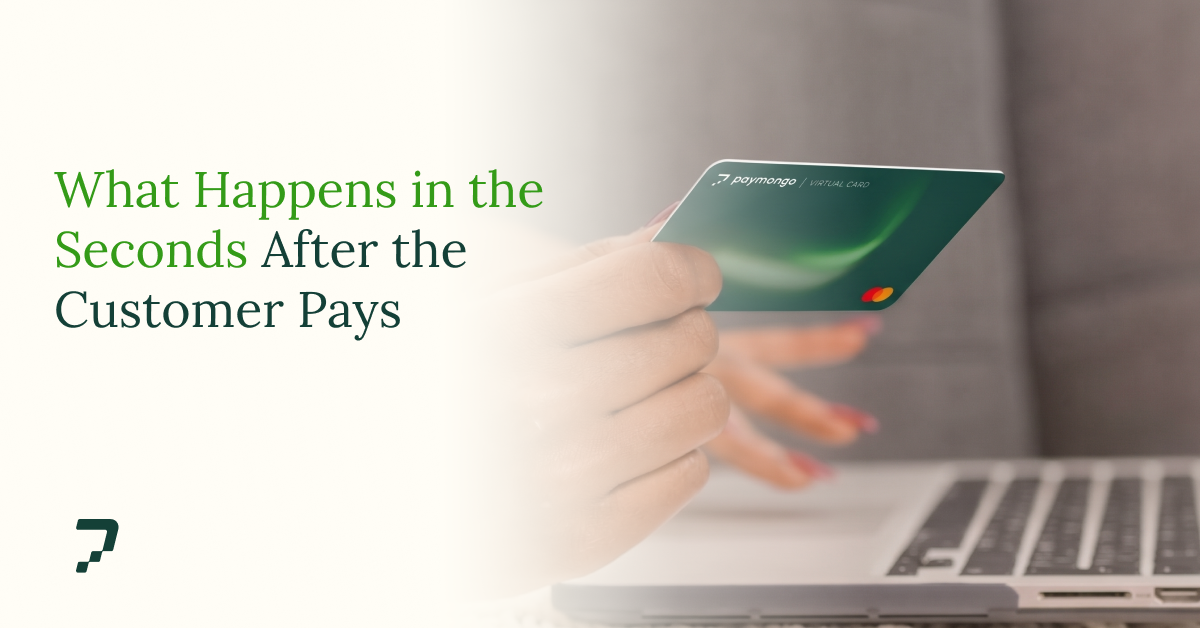
What happens in the seconds after a customer taps Pay
We'll use a card payment as the example, since it passes through the most hands.
- Your checkout hands the card details to the gateway. The number never touches your own website. The gateway swaps it for a token, so the real card number isn't stored anywhere it doesn't need to be.
- The gateway screens it. Fraud rules look at the device, the location and how many times this card has been tried in the last few minutes.
- The bank asks the customer to confirm. This is the OTP or in-app prompt most Filipino cardholders know well, and it's where a lot of payments quietly fall through. The SMS comes in late, or the customer switches apps to find it and never comes back. When it does go through, fraud liability usually shifts away from the merchant.
- The bank decides. Visa or Mastercard carries the request to the customer's bank, which checks the balance or credit line and its own risk signals, then sends a yes or no back the same way. Your store gets a paid status and you get the order.
At this point the bank has promised to pay you, but it hasn't actually paid. The customer's funds are set aside, and your bank balance looks exactly the same as it did a minute ago.
How e-wallets, QR Ph and online banking differ
E-wallets cut out most of those steps. With GCash, Maya or GrabPay, the customer is sent to their wallet app, approves the amount, and the balance is debited on the spot. When an e-wallet payment fails, it's usually because there wasn't enough in the wallet. Direct online banking through BPI or UnionBank works much the same way, except the customer logs in to their bank instead.
QR Ph is the BSP's national QR standard and runs on InstaPay. One code works with any participating bank or e-wallet app, and because both sides sit on the same real-time rail, it's one of the quickest methods to settle.
After the tap: clearing and settlement
The approval you see at checkout happens in seconds, but the money itself moves later. That second part is called settlement, and it usually happens in batches over the next few banking days.
Clearing is basically end-of-day bookkeeping between banks. The issuer, the network and the acquirer go through the day's transactions and agree on who owes whom, and each one takes its cut of the fees along the way. Once that's settled, the funds are released to the gateway, which then pays you.
So your payment mix matters. A store where most customers pay by QR Ph will see its money days before one where most pay by card. Here are PayMongo's clearing times, from its documentation:
Banking days run Monday to Friday, excluding holidays. A payment made after 5 PM counts as the next banking day's transaction. So a card payment on a Friday evening clears the following Thursday. Holy Week and the stretch between Christmas and New Year make it worse, since several banking days drop out at once.
How payouts work and how long they take
A payout is when your provider finally sends the money to your bank. Everything that has cleared since the last one is added up, fees and refunds are taken out, and the rest goes to the account you registered.
Payouts at PayMongo
PayMongo pays out daily. Once a payment has cleared and PayMongo's payment partners (the banks, e-wallets and card networks) have settled the funds to PayMongo, the money is sent to your bank on a T+2 basis, two banking days later. The two-day count starts on the day PayMongo receives the settlement, not on the day of the sale. A card payment, for example, takes three banking days to clear, so PayMongo receives the funds on the fourth banking day and the payout lands in your bank about five banking days after the transaction.
On payout day, your dashboard shows the payout as In Transit, then Deposited once your bank has it. Most land the same day. Some banks take another day or two to post the funds, and a holiday pushes the payout to the next business day. If your cleared balance is under ₱80, it rolls over to the next payout. Refunds come out of the payout as well, so a big refund can make one payout look short. PayMongo doesn't charge you to receive a payout, though your bank might charge for incoming transfers.
How other providers compare
Every provider handles this a little differently, and some don't publish their timelines at all. Here's what each one says publicly as of October 2026.
Cards are the slowest method across the board because the networks clear in multi-day batches. Over-the-counter payments can take even longer. Xendit, for example, lists 7-Eleven payments at five to eight business days. If your customers mostly pay by card or at convenience stores, plan your cash flow around a one-week lag.
What the wait actually costs you
Say you sell clothes online and run a payday sale on Friday the 15th. Most orders come in after dinner, around 8 PM, once people have checked their bank apps. Because that's past the 5 PM cutoff, PayMongo treats every one of those payments as Monday's. Here's when the money from that one evening reaches you on the standard schedule:
Card payments take the longest, since they clear on Thursday and the two-day payout count then runs over the weekend. If a third of your sale came in by card, a third of your revenue is out of reach until the 25th.
Meanwhile, your costs don't wait. You probably restocked before the sale, maybe from a supplier who wants cash upfront. Your Facebook and TikTok ads were already charged to a card. If you have staff, payroll comes due on the 30th, and the courier pickups for all those orders start on Saturday. The sale was profitable on paper, but for more than a week you're funding it out of your own pocket.
Restaurants feel a version of this every day. A kitchen that buys from the palengke each morning pays in cash, while a growing share of its customers pay by QR Ph. Every day those payments wait to clear is a day the owner covers the market run from somewhere else.
Instant settlement: getting paid in seconds instead of days
With instant settlement, you don't wait for clearing or payout day. Instead of clearing over one to three banking days and then waiting for the T+2 payout, an eligible payment lands in your PayMongo Wallet as soon as it's marked as paid. From there you can transfer it to your bank or use it to pay suppliers.
It runs 24 hours a day, weekends and holidays included. Go back to that Friday-night payday sale. With instant settlement on, the QR Ph and GCash orders would be in your Wallet that same evening, ready to pay the supplier on Saturday, instead of waiting until Thursday or Friday. The card orders would still follow the regular schedule, so it helps most when your customers already lean toward QR and e-wallets.
It only covers QR Ph and e-wallets (GCash, Maya and GrabPay). You can switch it on for one or both, and cards stay on the normal schedule. It also isn't on by default. You email PayMongo support, they review your account, and if it's approved they confirm your rate and turn it on.
The trade-off is an extra per-transaction fee on top of the standard processing fee. It's deducted before the funds reach your Wallet, so what you see is what you can spend. PayMongo's pricing page lists it at 2.23% bundled with QR Ph.
Whether that's worth paying depends on how fast your cash turns over. A milk tea shop buying supplies every morning, or a Facebook seller who restocks as soon as a batch sells out, will probably feel the wait for a standard payout more than a business sitting on a few months of cash.
Before you request it, check it against a normal week. Take the extra fee on that week's QR Ph and e-wallet sales and compare it with what the wait is costing you now, like a restock you had to push back.
Why some payments fail, and how they're kept safe
Some payments do get declined. The most common reasons a payment fails in the Philippines are fairly ordinary: the customer doesn't have enough balance, the one-time PIN expires before they enter it, or the bank's fraud system flags a purchase that looks unusual for that cardholder. E-wallet sessions can also time out if the customer switches apps and forgets to come back.
You can't do much about most of these. What you can do is give customers a backup option. A customer whose card is declined will often finish the purchase with GCash or QR Ph if the option is right there on the checkout page.
On the security side, a few layers protect both you and your customers:
- Tokenization. Card numbers are replaced with tokens, so your systems never hold the real data.
- PCI DSS compliance. Gateways that handle card data must meet the card industry's security standard. PayMongo is PCI DSS Level 1 certified.
- 3D Secure. The OTP or app prompt confirms the cardholder is the one paying.
- BSP supervision. Payment providers in the Philippines are regulated by the Bangko Sentral ng Pilipinas, which sets rules on how customer funds are handled and protected.
Where PayMongo fits
If you already use PayMongo and the wait between clearing and payout is what's hurting, email support and ask about instant settlement for QR Ph and e-wallets.
If you're still picking a provider, look past the transaction fee and ask how long each one takes to actually put money in your bank. It's an easy thing to skip during signup, and it tends to matter most the first time you're waiting on a payout.
Frequently asked questions
How long does it take to receive money from PayMongo?
Payments first clear in one to three banking days depending on the method. Once they've cleared and been settled to PayMongo, they're paid out daily on a T+2 basis, so they reach your bank two banking days later. Counted from the day of the sale, that works out to about five banking days for a card payment, since cards take three banking days to clear. With instant settlement, QR Ph and e-wallet payments reach your PayMongo Wallet as soon as they're paid.
Why does a card payment take longer than GCash or QR Ph?
Card networks like Visa and Mastercard clear transactions in daily batches across several institutions, which adds days. QR Ph runs on InstaPay, a real-time rail, so funds move between banks almost immediately.
Does PayMongo pay out on weekends and holidays?
Standard payouts only run on banking days. If payout day falls on a holiday, it moves to the next business day. Instant settlement works 24/7, including weekends and holidays.
How do I activate Instant Settlement on PayMongo?
Email PayMongo support to request it. PayMongo reviews the request, confirms your fee rate, and turns it on for QR Ph, e-wallets or both.
Is there a fee to receive payouts?
PayMongo doesn't charge a fee to receive a standard payout. Your bank may charge for incoming transfers, so check with them. Instant settlement has its own per-transaction fee.