Live selling in the Philippines: how it works, and how the money actually gets to you
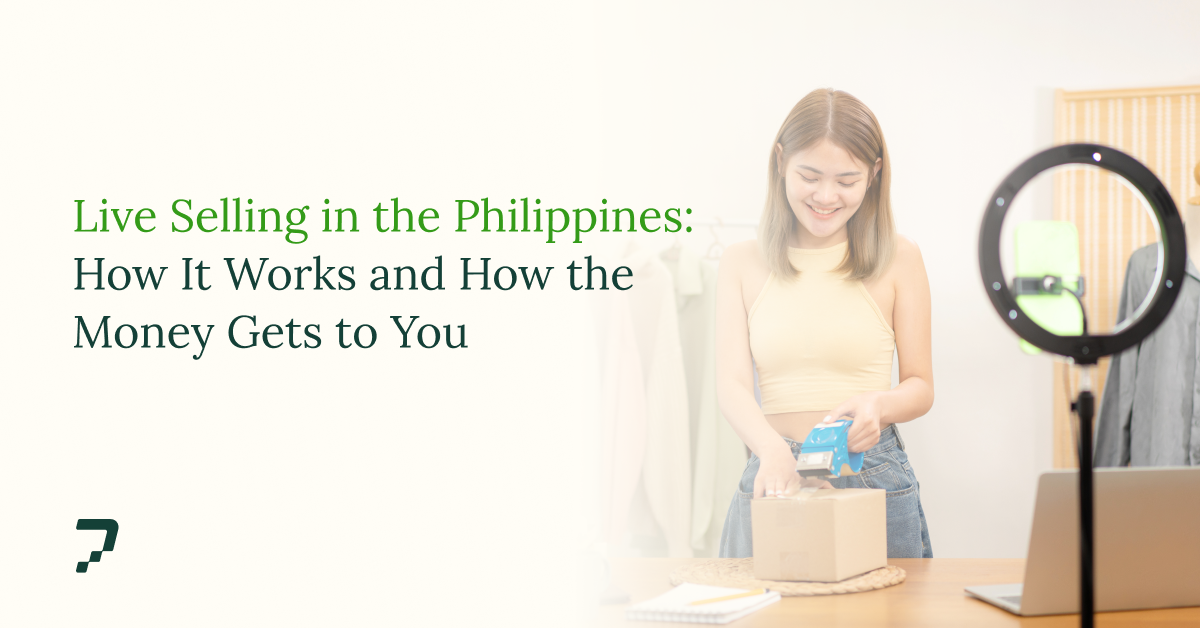
Live selling has quietly become the Philippines' most Filipino way of doing e-commerce. A Ninja Van white paper on live selling in Southeast Asia found that 47% of Philippine sellers surveyed go live every day, against a regional average of 31%, and that Filipino sellers put in as much as 14 hours a week on air. More than half said it earns them more than posting the same items on a marketplace.
Those numbers describe the front of the business: the camera, the host, the comments flying past. What they leave out is the part that decides whether a live is profitable, which is everything that happens after someone types "mine." That is where orders get lost, where sellers spend their evenings matching screenshots to names, and where the difference between a platform-native live and a Facebook live really shows up.
This guide covers both halves. It explains what live selling is and the two ways it is run in the Philippines, then walks through how an order travels from a comment to a paid, shipped parcel in each model, and where it tends to fall apart.
What live selling is
Live selling is selling through a real-time video stream, where the host shows products, answers questions and takes orders while viewers watch. It grew out of home shopping television and the Facebook buy-and-sell groups that were already huge here before the pandemic. Lockdowns turned it from a niche into a habit, and the platforms responded by building commerce tools directly into their live features.
The appeal for buyers is obvious once you have watched one. You can see the actual item rather than a studio photo of it. You can ask whether the fabric is thick, whether the shade suits morena skin, whether the phone has scratches, and you get an answer in seconds. For sellers, a live session collapses the whole funnel into an hour, with discovery and purchase happening in the same stream, and the energy of other people claiming items pushes hesitant viewers to decide.
It is also a channel where the seller does the selling. A product listing sits passively waiting for traffic. A live host works the room, bundles items on the fly, drops a price when the comments go quiet, and brings regulars back by name. That is why fashion, beauty, food and home goods were the early adopters, and why the format keeps spreading into categories like gadgets, plants, ukay finds and even real estate viewings.
The two ways live selling runs in the Philippines
Sellers tend to talk about "live selling" as one thing, but there are really two models, and they behave very differently once an order is placed. In the first, the platform handles the transaction. In the second, the seller does.
Platform-native live selling
This is TikTok Shop Live and Shopee Live. Products are pinned to the stream, the viewer taps to add to cart, pays inside the app and the order drops into the seller center like any other order. Shipping is arranged through the platform's logistics partners, and the platform holds the money until delivery is confirmed. The seller never touches the payment and never has to confirm anything in the comments.
Comments-based live selling
This is the Facebook model, and it is still how a very large share of Filipino live selling happens. Facebook has no native checkout for live streams in the Philippines, so the stream is the storefront and the comments are the order form. A viewer claims an item by commenting "mine" with the code the host called out. The seller or a moderator replies "CF" to confirm it, then after the live the team sorts through the claims, messages each buyer, asks for payment, waits for a screenshot and arranges delivery. Instagram lives run the same way.
Here is how the two models compare on the things that affect a seller's margin and time.
Neither model is simply better. Platform-native lives give you reach and remove the admin, and in return they take a cut of every sale and keep the customer. We have broken down what that cut looks like in our guide to Shopee, Lazada and TikTok Shop seller fees, so we will not repeat the numbers here. Comments-based lives leave you with the whole margin and a direct line to every buyer, and the price you pay for that is the work that starts the moment you end the stream.
From "mine" to paid: where orders leak
On TikTok Shop or Shopee Live, the path from interest to payment is short because the platform built it. The buyer pays before the order exists, so a claimed item is a paid item. The seller's problems are different ones: thin margins after fees, dependence on the algorithm, and payout timelines set by someone else.
On Facebook the path is longer, and each step is a place where a sale can disappear.
1. The claim
Comments move fast during a good live. Two people type "mine" on the same code within a second of each other, a moderator misses one, or the buyer typed the wrong code. Most sellers handle this with a moderator and a spreadsheet, or with the "mine" plus "CF" convention that Filipino live sellers have standardized over the years. If you are new to the shorthand, our glossary of Philippine online selling terms covers the full vocabulary.
2. The tally
When the live ends, someone has to go back through hundreds or thousands of comments and build the order list: who claimed what, at what price, with which bundle discount. Sellers who do several lives a week describe this as the most tiring part of the job, and it is where most honest mistakes happen. An item gets double-booked. A claim gets attributed to the wrong buyer. A promised freebie is forgotten.
3. The payment request
Now each buyer has to be messaged individually with their total and told how to pay. The traditional way is to post or send the seller's GCash or bank details and wait for a screenshot. This is where live selling loses the most money, for three connected reasons.
First, the buyer has to leave Messenger, open another app, type the number and the amount, take a screenshot and come back. Each of those steps is a chance to get distracted or to decide the impulse has passed. The excitement that made them type "mine" at 9 p.m. is not there at 11 p.m. when the payment request arrives.
Second, the seller cannot be sure the payment is real until it is checked against a wallet or bank statement. Edited screenshots are common enough that many sellers now insist on a transaction reference number and verify each one manually. Filipino seller communities have their own vocabulary for the people who claim and never pay, which tells you how routine the problem is.
Third, every payment that comes in as a transfer lands in one undifferentiated pile. On a night with 80 orders, matching 80 transfers of similar amounts to 80 Messenger threads is slow, and the ones that do not match sit unresolved until someone has time to investigate.
4. Shipping and the follow-up
Once a payment is confirmed, the order is packed and handed to a courier, and the buyer gets a tracking number. For sellers running comments-based lives, this part is usually fine. The pain was all upstream.
Taken together, the leaks have a shape. Platform-native live selling solved the order and payment problem by owning it, and charges for the privilege. Comments-based live selling leaves sellers with the better economics and a payment step that was never designed for commerce.
Closing the gap without giving up Facebook
The fix most experienced Facebook live sellers have arrived at is to keep the live exactly as it is and change only the payment step. Instead of sending account details and waiting for a screenshot, they send a payment link.
A payment link is a checkout page you create in a few seconds and send through Messenger, a comment reply or a group post. The buyer opens it, chooses how to pay, and completes the payment without leaving their phone or re-typing anything. With PayMongo Payment Links, that means GCash, Maya, QR Ph, cards and online banking on one page, which matters because asking a buyer to pay through a method they do not have is one more reason for the sale to stall.
The bigger change is on the seller's side. Each link carries the buyer's name and what they ordered, each payment is confirmed by PayMongo rather than by a screenshot, and every transaction shows up in one dashboard with the amount, method and status. The post-live tally still has to happen, but the chasing and the manual verification largely go away. Funds settle to your bank account on PayMongo's standard payout schedule, and sellers who need the cash sooner can request instant settlement for a fee.
It also fixes the trust problem in both directions. Buyers are paying a named business through a proper checkout rather than sending money to a personal number, which is increasingly what cautious buyers expect. Sellers stop exposing their personal account details in public comments, which is a small security win on its own.
If you already accept GCash, our guide on how to accept GCash payments as a business explains the difference between a personal wallet, a GCash business account and a gateway, and when each makes sense.
What happens between lives
Live sellers with a loyal following tend to run into the same problem after a few months: buyers message between sessions asking whether a particular item is still available, and there is nowhere to send them.
The options are to answer every message by hand or to point them to a marketplace listing and pay a commission on a customer you already own.
A simple storefront under your own name solves this. PayMongo Storefront lets you put your catalog on a page you can link in your bio and pin to your Facebook page, with the same checkout and the same payment methods as your links, so repeat buyers can order on a Tuesday afternoon without waiting for Friday's live. The live becomes the acquisition event, and the storefront handles everything after it.
Sellers who later move onto TikTok Shop or Shopee Live often keep the storefront anyway, because it is the one channel where they are not paying a commission on their own regulars.
Getting started
If you are already running live selling on Facebook or Instagram and still collecting payments by screenshot, the quickest improvement is to create a PayMongo account, set up your first payment link and use it on your next live. There is no integration to build, no monthly fee, and you pay a transaction fee only when a payment comes in.
Create a PayMongo account and send your first payment link before your next stream.
Frequently asked questions
What does live selling mean?
Live selling means selling products through a live video stream, usually on Facebook, TikTok or Shopee. The host presents items in real time, viewers ask questions and place orders during the broadcast, and the seller fulfills the orders afterwards. It is sometimes called livestream commerce or live commerce.
How do you do live selling on TikTok?
You need a TikTok Shop seller account and a TikTok account that meets the platform's requirements for going live. Once your products are listed in TikTok Shop, you can pin them to your live stream and viewers buy them directly in the app. TikTok handles payment, and the order appears in your Seller Center for fulfillment.
How do live sellers on Facebook get paid?
Facebook has no built-in checkout for live streams in the Philippines, so sellers collect payment themselves after the live. Traditionally that meant sharing a GCash or bank account number and asking for a screenshot. Many sellers now send a payment link instead, so the buyer can pay with GCash, Maya, a card or online banking and the payment is confirmed automatically.
Is live selling still profitable in the Philippines?
For many sellers, yes. In Ninja Van's regional live selling study, 52% of Filipino respondents said live selling was more profitable for them than posting on marketplaces. Profitability depends heavily on the model: platform-native lives have fees deducted from every order, while comments-based lives keep the full margin but cost more time in order handling.